
LEARN MANDARIN CHINESE

WITH YOUR PERSONAL GENIE

Join the language
learning revolution

sign up

Expand your life opportunities with a new language.

Join our early supporters and experience the next evolution in mastering a new language — a brain-based system powered by Cognitive AI, built on the proven success of Kungfu English.

Why Choose Speech Genie?

Make that new language part of your everyday life.

Starting from as little as 10 minutes per day.

Join with:

“Chris, your language learning method has changed and inspired millions of lives — including mine.”

Maria Shimura TEDx speaker, interpreter, English teacher.

More than 10,000 non-English speaking people in Asia have successfully acquired English with a purpose-built mobile study system developed by Chris Lonsdale.

Learn ANY language in 6 months — the same way you naturally learned your mother tongue — and speak it fluently without fear or hesitation. The Speech Genie system combines 15 years of refined human brain science with unique AI-powered interaction, delivering the thrilling experience of mastering a language in as little as just a few months.

Inspired Lives – A Cross Section

Register now to follow us and discover how to accelerate your new language mastery!

Why is it so hard to speak a new language? 

It’s not your Fault !

diligence not rewarded

You study vocabulary and grammar, but freeze up in conversation.

embarrassment

You’re afraid of making mistakes in front of others.

too busy

You’re too busy to take scheduled lessons.

A new way to learn …

your personal genie

Engage with your genie through interactive exercises

instant feedback

Practice speaking and receive instant feedback on your pronunciation without embarrassment

learn naturally

Build your vocabulary and confidence, naturally and progressively

Through immersive scenarios, using pictures, sounds, and gestures–the same way children learn from a parent, except this “parent” is a friendly avatar.

You’ll focus on the most important words and phrases first, building a strong foundation for real-world conversations.

Touch your nose

Brain Soaking

Absorb the rhythm and the sounds of your new language effortlessly through relaxed listening.

Comprehensible Input

Understand naturally with images
and context.
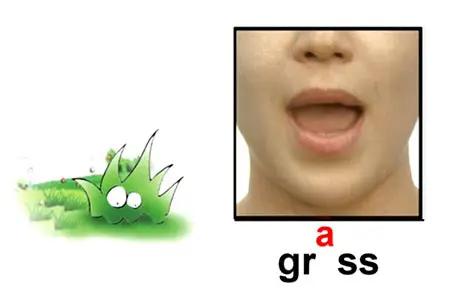
FaceFonics®

Mimic mouth movements 
to master accurate pronunciation,
just like a child
observing a parent’s face.

Language to Body

Connect words to 
gestures and actions for multi-sensory understanding and deep retention.

Role Reversal

Practice speaking and 
get meaningful responses!  

Cognitive AI

Get instant feedback on pronunciation, grammar, and fluency, augmented
by Cognitive AI.

Over 10,000 people worldwide have already experienced this brain-friendly methodology, leading to fantastic results.

The methodology has been popularised by Chris Lonsdale’s 2013 TEDx talk on “How to Learn Any Language in Six Months” which has been in the TEDx top 10 for more than 12 years, and has been viewed by more than 36 million people.

speech genie

Being Built Now


SpeechGenie is a next-generation language study app that replicates the process of first language acquisition using applied brain science and cognitive AI.

Genie is your AI language guide — always by your side, giving you practice and feedback just like a real conversation partner.

The Next Evolution of SpeechGenie Rebuilding for a Global Audience.

AI observes & responds

AI observes & responds to you every step of the way, and to every opportunity for your brain to acquire your new language.

Tailored interactions

Tailors interactions that will always meet you at your level.

Natural Acquisition

Uses the language you are acquiring, without rote memorisation of vocabulary or grammar translation.

Embarrassment Free Feedback

Feedback on various skills, with suggestions for focused practice.

English and Chinese

Initially will support mastery of English and Chinese; Japanese and other languages to be added soon.

Always Accessible

Unique platform design allows use on almost any device, such as smartphone, tablets and desktop and large screen devices.

just 66 words.

can master 50% of
everyday language

You don’t need to learn thousands of words to start speaking. The science behind Speech Genie shows that you can achieve a remarkable level of fluency with a surprisingly small core vocabulary. We focus on the right words, in the right way, to get you conversational fast.

66 words → 50% of daily conversations
2000 words → 80% of daily conversation
3000 words → 98% fluency in daily life

Learn anytime,
anywhere

Speech Genie is more than just an app. It’s your partner in language mastery.

Built on the success of Kungfu English and advanced AI technology.

“Spiral” course design guarantees that you meet all words many times in multiple contexts, guaranteeing recognition and retention.

You progress through the course based on the speed at which you master each core skill, and the comfort level you have.

Practice confidently in a private, supportive environment.

Every interaction is meaningful and goal directed, just like in real life.

Engage with pictures, sounds and videos for a richer, “whole-brain” experience.

Learning feels like play, not work!

Learn anytime, anywhere, right from your phone.

Join the language
learning revolution!

We’re launching Speech Genie on Kickstarter to bring this groundbreaking technology to the world. Our VIP list is filling up fast. Sign up now for the earliest chance to experience firsthand the future of multi-lingual mastery. Together, we can make barriers disappear !

Meet the Team Behind the Method 

Learn Mandarin Chinese

Imagine you hold a question in your mind so long that it becomes part of how you think. That was my question for many years: How can you speed up learning? If you could learn faster, you could spend less time in school — or even bypass traditional schooling altogether.

Based on that question, and the work that I have done over decades to answer it, I can say this with confidence: you can learn Chinese — or any language, for that matter — far more quickly (and more enjoyably) than most people have been led to believe. I know that sounds like marketing. I used to roll my eyes at claims like this too. But there’s a “new paradigm” hiding in plain sight: the moment you align learning with how the brain actually works, progress stops feeling like a grind.

When I first landed in China in 1981, many people told me a Westerner would need ten years to learn Chinese well — fluent was almost spoken of as a fantasy. I didn’t know enough to be intimidated. I just experimented. By applying psychological insights, I became conversational in six months and later reached near-native ability. I even published a book that I wrote in Chinese characters — and, to my surprise, it became a best seller.

That experience (and the years of reflection that followed) revealed a radically different approach to how one should learn any language — one that upends traditional, grammar-heavy classrooms and treats acquiring a new language not as an academic chore, but as a meaningful, brain-friendly adventure. And in today’s world — where more and more people want to travel to China, work with China, and learn Mandarin Chinese — it’s vital to use methods that reflect how our brains naturally learn.

This is true for any language, and especially true for languages that feel “far” from your own. Most learners assume that distance means difficulty. It doesn’t, not necessarily. Modern research (and a lot of lived experience) suggests that with the right input, motivation, and practice, non-native adults can make rapid progress.

Principles of Accelerated Language Acquisition

Drawing from my TEDx framework, there are five principles that underlie rapid language acquisition — no matter which language you wish to master.

  1. Attention. Your brain decides what to filter in and out. When you listen to a new language, you need to train your brain to pick up the sounds — even before you understand them. Without letting your brain become familiar with tone, rhythm, and unfamiliar phonemes, comprehension stalls. (This is the part people skip because it feels “too basic.” It isn’t.)
  2. Meaning. Understanding comes before words. We don’t learn by memorizing isolated vocabulary; we learn by making meaning. Even early on, body language, context, and simple gestures can help you grasp what’s being said. This is the core of comprehensible input. And yes — you can learn any language with comprehensible input as the core approach.
  3. Relevance. The material has to matter to you. If what you’re listening to or speaking about doesn’t connect to your life, your brain won’t prioritize it. Engage with content that touches your personal goals — business, travel, friendship, culture. And at the start, keep it practical: “go there,” “come here,” “give me that,” “where is…?” (This sounds simple, and it is. That’s the point.)
  4. Memory. Your brain holds onto what is meaningful, repeated, and emotionally resonant. High-frequency vocabulary — the “core” — should be the first thing you internalize. As I explained in my TEDx talk, you don’t need tens of thousands of words to communicate; a few thousand common ones will carry you a long way.
  5. Psychophysiological state. Your emotional and mental state matters. If you’re anxious, tired, or frustrated, your brain is less receptive. But if you’re relaxed, curious, and willing to tolerate ambiguity, even tones and unfamiliar grammar structures won’t feel so alien. This is not “soft stuff.” It’s the switch that changes everything.

Actions That Turn Principles Into Progress

Principles are good, but you need action. Here are the seven actions I proposed, adapted to the specific challenges of mastering a non-Western, non-Latin-based language.

  1. Listen a lot (“brain soaking”). Immerse yourself in listening as much as you can: podcasts, songs, dialogues, movies. Even if you don’t understand — especially if you don’t — this “soaking” helps your brain attune to the sounds, tones, rhythms, and patterns that were once unfamiliar to you. The first week can feel like noise. Then, suddenly, it doesn’t.
  2. Get meaning first. Use visuals, stories, gestures, or (as a last resort) translation when you begin. Before drilling characters or pinyin, try to understand what is being said. Your comprehension grows beneath the surface. You may not notice it day to day — but you will notice it month to month.
  3. Start mixing. Language is inherently creative. With a few verbs, nouns, and adjectives you can start combining them to make real meaning. Don’t wait for perfection; use what you know to begin expressing yourself. You will say clumsy things. Good. That’s how the machine learns.
  4. Focus on the core. Not all vocabulary is equal. You learn quickly when you prioritize high-frequency words and phrases native speakers use daily: pronouns, simple verbs, question phrases, common connectors. Research shows that a core set of vocabulary gives you disproportionate communicative leverage. (In plain English: it’s the best “ROI” you’ll ever get.)
  5. Use your toolbox from day one. In your first week, you can already say things like “What does that mean?”, “Repeat please,” “I don’t understand.” It’s not about polishing perfection; it’s about using the language as a living tool. If you only learn one phrase early on, make it the one that keeps the conversation going.
  6. Find a “language parent.” Someone who listens patiently even when you’re less than perfect, doesn’t correct every error, and cares about whether they understand what you mean. This person supports you emotionally and linguistically — like a parent does for a child. The emotional safety is not a “nice-to-have.” It’s a multiplier.
  7. Copy the face. You have about 43 muscles in your face that shape pronunciation. Watch native speakers and let your subconscious mimic lip shapes, facial changes, and (when you can see them) tongue movements. Feel how the words resonate in your face and throat. This can feel awkward at first. That’s normal. Keep going — it works.

And finally: direct connect — build internal pathways, connecting what you already know (images, feelings, mental representations) to new sounds in your new language, bypassing translation. Over time, this becomes automatic. One day you’ll realize you “just understood” without converting anything into English first. That moment is hard to forget.

Why Traditional Methods Fall Short

Many traditional approaches emphasize grammar, rote memorization, or textbook drills. While structured lessons and formal classes can help some people sometimes, they often miss critical elements:

  • Too much focus on grammar rules and written characters early on can overwhelm learners.
  • Repetition without meaning — drilling vocabulary out of context — makes it hard to retain.
  • Lack of real interaction, especially two-way conversation, limits production ability.
  • Emotional state and brain science are rarely taken into account: classrooms can create frustration or anxiety, which inhibits progress. And for non-native adults, immersion alone is not enough. Simply surrounding yourself with native speakers doesn’t guarantee you’ll pick up anything. I’ve seen Westerners spend years in China, Japan, and other countries in Asia with surprisingly little progress — not because they’re lazy, but because “immersion” without the right conditions is mostly just noise.

Insights from Kungfu English

Within the Kungfu English course I developed, these principles become very practical. The program is designed with humanized technology, combining Eastern and Western pedagogical insights, and rooted in Lozanov’s Suggestopedia principles. Learners receive video content, study paths, and scaffolded lessons relevant to real life, not just academic exercises. The system doesn’t just dump vocabulary on you; it guides you through meaning, repetition, safety (no fear of constant correction), and gradual productive practice. Kungfu English demonstrates that accelerated, brain-friendly learning works — and it also shows the next challenge: scaling it well.

The Challenge of Studying Mandarin Online

If you want to learn Mandarin Chinese as a foreign language (duìwài Hànyǔ jiàoxué), there are some unique challenges for online learners.

  1. Tonal complexity. Tones can make comprehension difficult at first — but mostly if you try to analyze them logically. Brain soaking, mimicking, and connecting what you hear directly to images and internal representations helps you move through the “tone wall” faster than you’d expect.
  2. Character system. Reading and writing hanzi (characters) is notoriously demanding; without context, characters can feel arbitrary. But if you focus first on linking sound to meaning — the way a baby does — then reading and writing become far more learnable later because the characters attach to something real.
  3. Lack of feedback. Many digital platforms provide input but little two-way, realistic conversation.
  4. Motivation and relevance. Online learners may lack community, emotional support, and meaningful goals — making practice feel dry or disconnected. To master a language online, you need more than flashcards: you need a system that matches how your brain learns, provides comprehensible input, gives you chances to produce meaningful speech even when it’s simple, and keeps you emotionally engaged. Otherwise, motivation fades. And when motivation fades, everything slows down.

The Next Generation: Speech Genie

This is where Speech Genie (from speechgenie.co) enters the picture. As an English speaker who now speaks two Chinese dialects as well, if I were prescribing the ideal program today for learning Mandarin online, it would look a lot like this. Speech Genie represents a new generation of language acquisition tools by combining brain science with Cognitive AI. Here’s how:

  1. Brain-science–informed course design. Speech Genie’s curriculum is not a random sequence of lessons. It’s built on principles derived from modern neuroscience and insights about how memory, attention, and emotional states influence comprehension and retention. The structure is meaningful, relevant, repeated, and delivered in a psychologically safe environment — aligning with the five principles above. Early modules focus on high-frequency vocabulary, core phrases, and dialogues. Meaning comes first (with visuals or context) before learners are burdened with complexity. Grammar is absorbed more than it is “taught.”
  2. Realistic two-way interaction via AI. One of the biggest limitations of many apps is one-way interaction: you listen, maybe repeat, but you don’t truly converse. Speech Genie uses Cognitive AI to simulate real conversation, so learners practice productive language — speaking and responding — in a low-risk environment. The AI can adapt to mistakes, adjust pace, and approximate a “language parent” who encourages you, doesn’t nitpick every error, and reflects back your meaning so you can refine it. That bridge — from understanding to speaking — is where most learners get stuck. This is designed to help you cross it.
  3. Feedback loop and muscle training. Because pronunciation depends on subtle facial and articulatory movements, Speech Genie interacts with you in a parent-like way: confirming meaning while modeling native patterns. Combined with “copy the face” practice and opportunities to hear yourself speak, you train not just your ears but your speech apparatus. (And yes, it can feel strange at first. If it feels strange, you’re doing it right.)
  4. Motivation & emotional engagement. Speech Genie can personalize the journey: tracking progress, celebrating small wins, and delivering content aligned with your goals (business, travel, relationships). That supports the psychophysiological state required for rapid improvement. The system is designed to reduce frustration, lower fear of mistakes, and sustain curiosity.
  5. Scaling the brain-based approach. Face-to-face language parents are invaluable, but difficult to scale. Speech Genie leverages AI to approximate that supportive role, especially for learners outside the language environment who can’t access in-person tutors. The aim is to make accelerated, brain-friendly language acquisition accessible globally.

Why Speech Genie Is a Game Changer for People Wanting to Learn Asian Languages

Putting it together, here are the reasons Speech Genie stands out as a next-generation approach to getting to grips with Asian languages:

  • Scientifically grounded: It’s not just an app; it’s a brain-science–driven system designed around how memory, emotion, attention, and meaning work together.
  • Conversational AI: Cognitive AI provides adaptive, meaningful dialogue, giving you practice in speaking, correction-in-context, and natural interaction.
  • Muscle-based pronunciation training: You don’t just hear; you speak and get feedback on tone, articulation, and coordination — crucial for any language.
  • Personalized & relevant: Content adapts to your goals, pace, mistakes, and interests, sustaining motivation over time.
  • Scalable and accessible: Whether you’re in Kuala Lumpur, Hong Kong, London, New York, or anywhere else, you can access multi-sensory materials and meaningful interaction without needing a native-speaking tutor physically present.

Addressing Common Concerns

Some skeptics may wonder:

  1. But isn’t AI unnatural? It’s true: AI isn’t a human. But well-designed Cognitive AI can mimic conversational nuance, give feedback, and adapt dynamically. For many learners, it’s close enough to a language parent to provide real practice – especially when the alternative is no conversation practice at all.
  2. What about characters (hanzi)? Speech Genie will integrate reading and writing in a scaffolded way, built on an initial foundation of spoken mastery. Once your brain is tuned to the sounds and you have real comprehension and production, studying characters becomes more meaningful because each character comes with context, usage, and rationale.
  3. Do I need to spend hours a day? Not necessarily. The principles here stress consistency over brute force. Short, meaningful daily sessions — especially with active interaction that becomes conversation — yield far better results than sporadic, intensive cramming.

Conclusion: The Future of Mastering a New Language Is Here

To learn well and quickly, non-native speakers need more than textbooks, rote drills, and passive listening. They need a method rooted in brain science, informed by real interaction, and energized by meaningful, goal-driven content.

My TEDx talk laid out five principles (attention, meaning, relevance, memory, psychophysiological state) and seven actions (listening a lot, meaning first, mixing, core focus, toolbox, language parent, copy the face, direct connect). These are practical strategies, not abstract ideas. Kungfu English shows how those strategies can be built into a structured course.

Speech Genie represents the next step: combining those strategies with Cognitive AI, real-time two-way conversation, pronunciation feedback, and scaffolding that helps learners move from comprehension to production. In the digital age, it stands out as a next-generation tool — one that leverages modern neuroscience and AI to help you not just understand a new language, but speak it confidently and fluently. If you’re serious about learning Mandarin Chinese — and you want a method that works with your brain rather than against it — this is exactly the direction I believe language learning is heading.