
We learn all the time, continuously, regardless of our age. We never stop, but would it surprise you that many scientists propose the model where we stop learning while we are young? That is false, although more research would help prove the point. We just need some people to use experimental science!
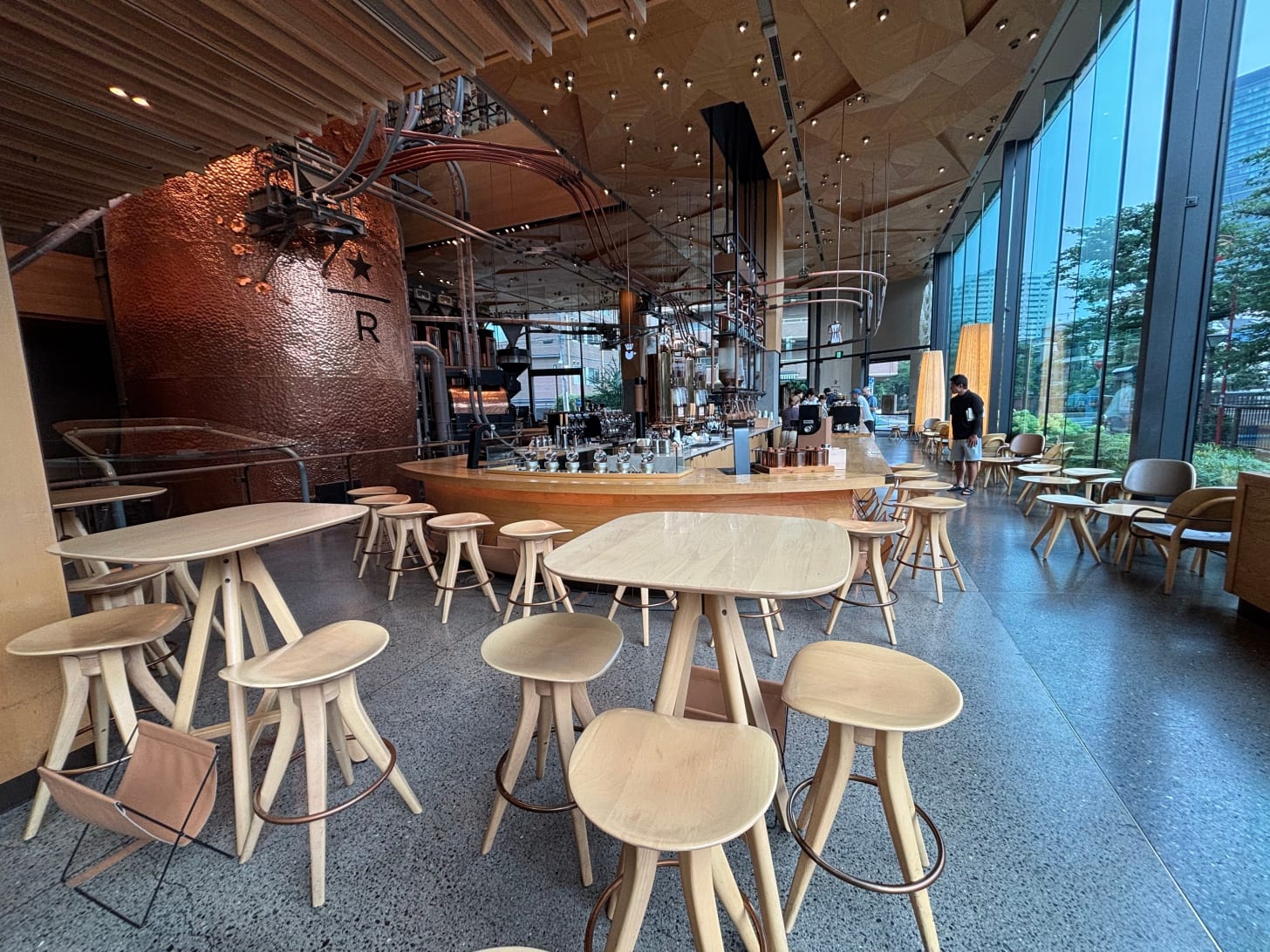
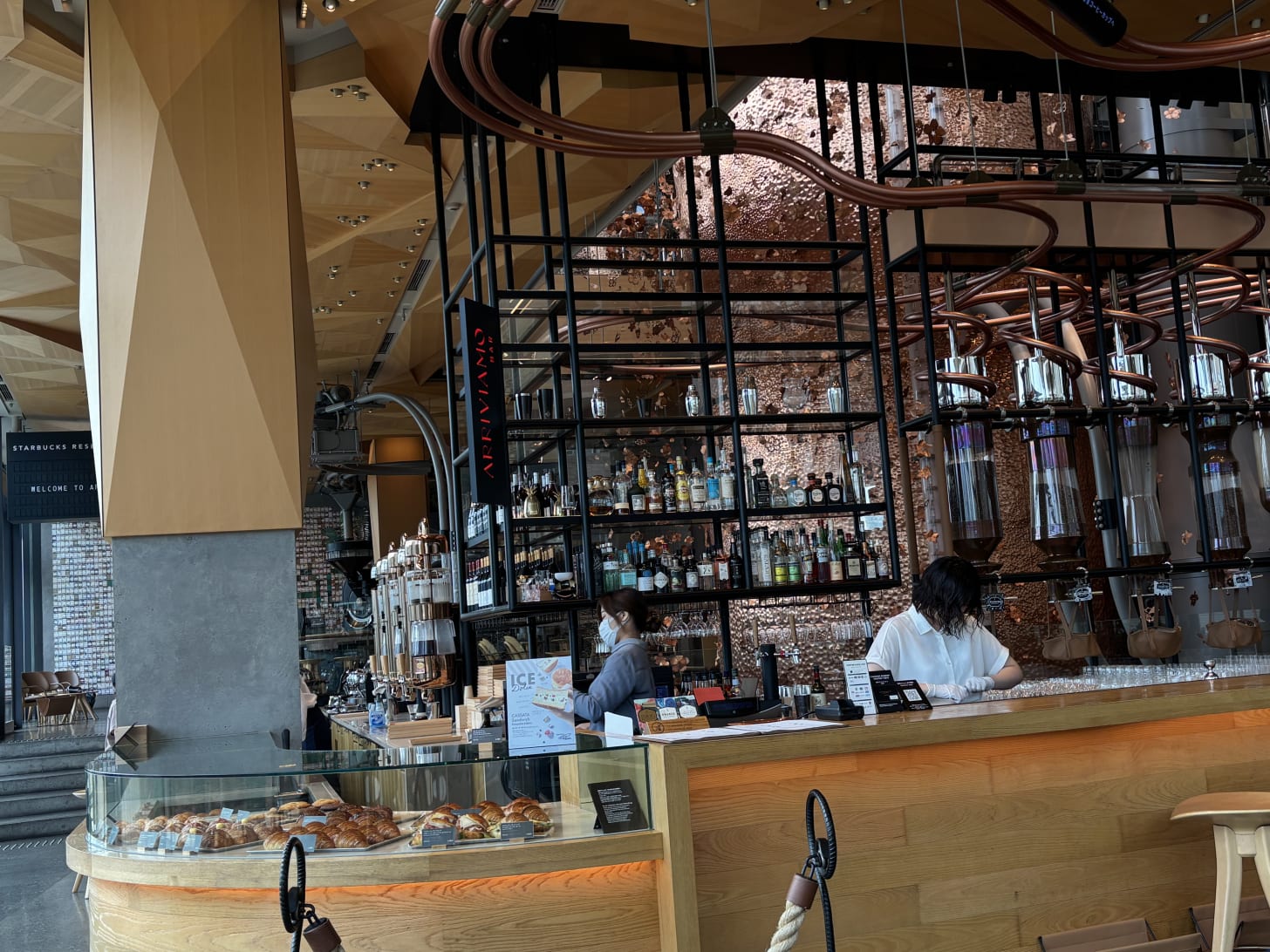
Inside view of the ground floor of a Starbucks in Tokyo – wow! The perfect venue to learn more about language and our ability to understand — with coffee!
OK, how can I claim that learning doesn’t stop while we are young? Why so confident?
Why is today’s statistical AI doomed to failure? Because the uses of language are infinite, the goal of finding an example of every kind of communication (to provide accurate recognition) is doomed to failure.
Let’s see what I learned at the Tokyo Starbucks!
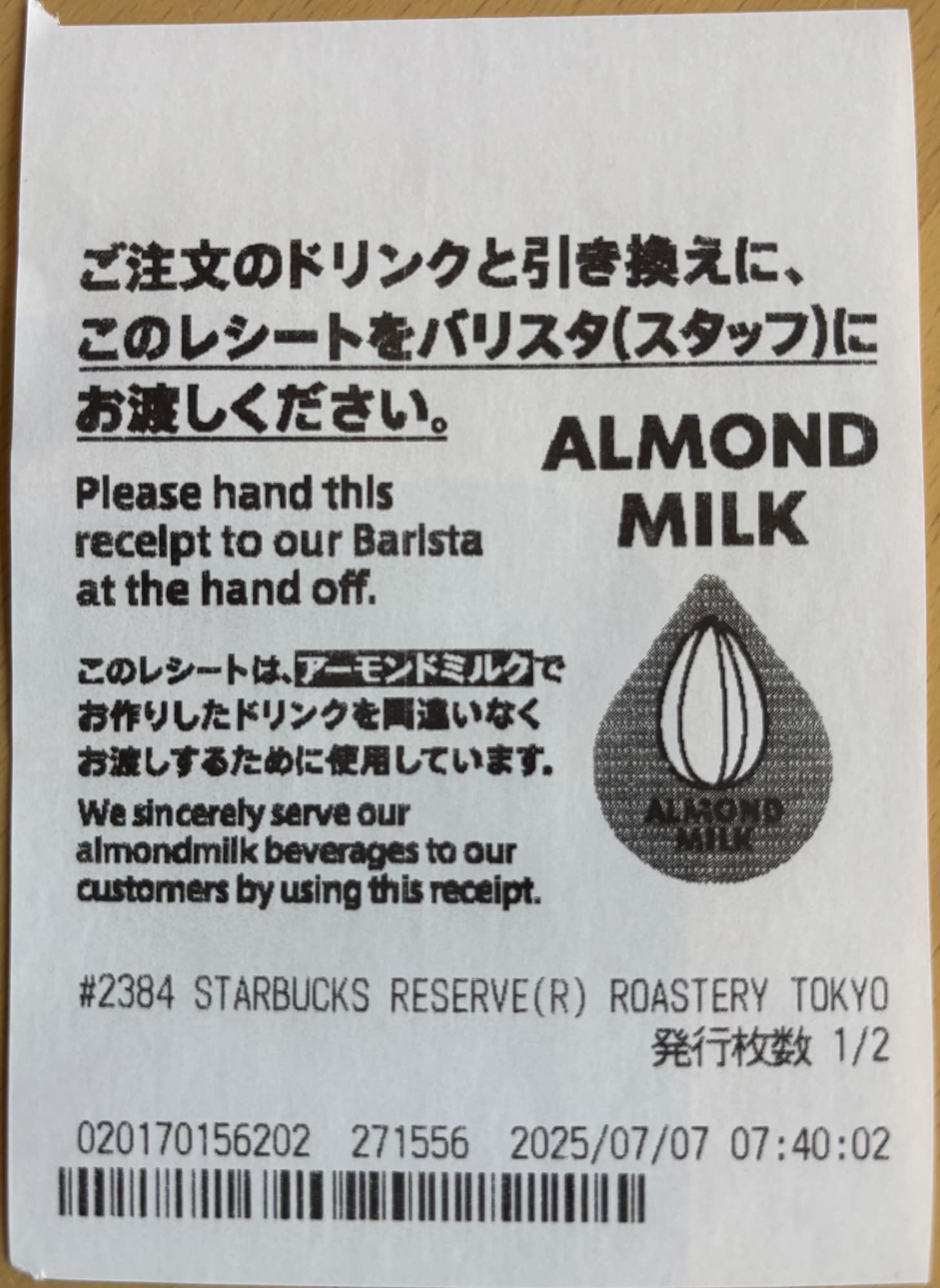
“Please hand this receipt to our Barista at the hand off.” Nope, that’s not great English, but I understand it perfectly. When we order drinks at a coffee shop, I know that they make the drink and call my name (or activate a ringing device) to alert me it is ready to pick. At the pick up (the hand off of my drinks), I need to provide my receipt to the barista.
I understand a massive amount about the process in question and can understand the change in perspective from my handoff (what I give up) to their handoff (what they give me).
It is like rocket science: language understanding deals with a very large number of considerations in dealing with the real world. The interactions back in the 1980s were called things like ‘scripts’ and ‘frames.’ The UC Berkeley FrameNet system seeks to document these kinds of “frames.”
If you are too old to learn, let me translate the second sentence for you: “We sincerely serve our almondmilk beverages to our customers by using this receipt.” This means:
“Please swap this receipt for your almond milk coffee.”
Really. There is some sincerity I left out, but the receipt doesn’t cause the drink to be served! I translated the word “almondmilk” into two words “almond” and “milk.”
The vast scope of my understanding of the situation allows me to effortlessly convert non-standard English into a crystal clear, unambiguous request. Based on brain observations over many years that led to the formation of Patom Theory, we can replicate this without ever needing to store multiple instances of language to recognize new forms of the language. We can learn words on the fly as well as phrases and different perspectives of events!
Let’s do one more example to show our amazing skill at decoding messages in language. Note: I will not attempt to recognize the Japanese language here since I not only don’t recognize the characters, but also the words, phrases and meanings of the relationships!
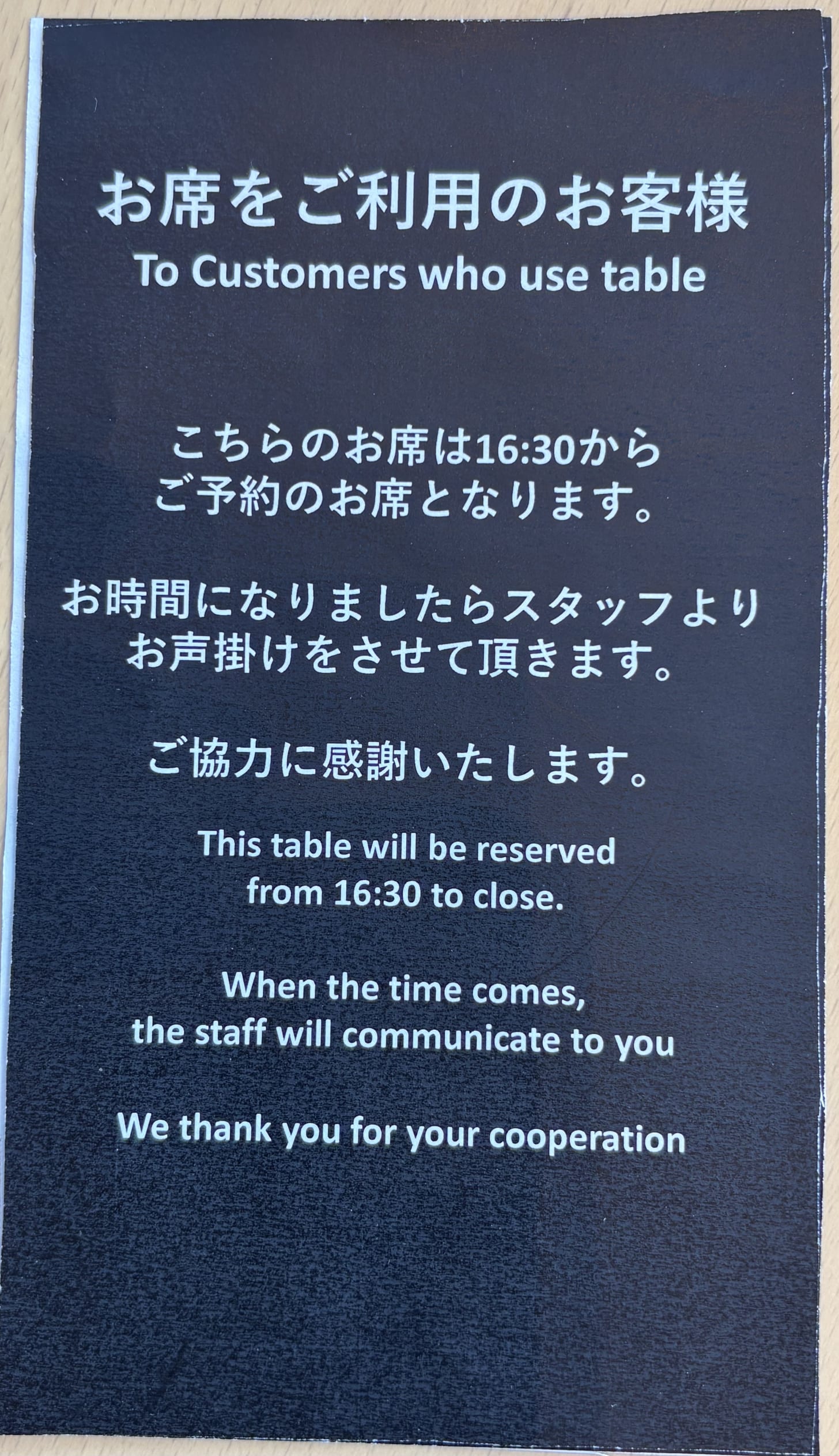
Let’s review each sentence to contrast my English with theirs.
“To Customers who use table”
OK, I don’t capitalize ‘Customers.’ Not ‘table’, but ‘this table.’ This sentence introduces the next ones, so perhaps a colon would help ‘:’?
“This table will be reserved from 16:30 to close.”
I would change ‘to’ to ‘until.’ Why? I don’t know, but I prefer ‘until’ with time-based (temporal) references of end points in durations. Maybe ‘we close’ is clearer than ‘close’ alone. “… from 16:30 until we close.”
“When the time comes, the staff will communicate to you”
Hhhmmm. A tough one as I wouldn’t be so direct. Perhaps, “We will remind you if you are still here after 16:30.” (I like each sentence to end with a period) There is no need to say that staff will ‘talk to’ (communicate WITH) us.
“We thank you for your cooperation”
Add a period! OK, that’s just my preference. This is a polite way of telling us what to do. “You have been warned” is more direct, but disrespectful to customers. It uses the ‘assumptive close’ since many people may not cooperate! But we can embed a false statement “your cooperation” inside such gratitude: “We thank you for…”
Conclusion
Language is an extremely precise and accurate tool of communication. As an infinite use of composable words and phrases in context, we can understand far more than is written to convey requests.
Understanding isn’t just memorization. The examples show words and phrases that I have never seen!
In this example, perfectly understandable English is being created by native Japanese speakers in a Starbucks shop in Tokyo. While I can write essays on the differences, the purpose of communications is to get our point across in a concise way. This fundamental approach to communications (refer to Grice’s Maxims for more detail) is a standard human model that we are never taught directly, but we seem to follow anyway.
For those who are hoping, sometimes called ‘hopium’, that statistical AI will ‘one day’ be able to understand the myriad of points I have made today, perhaps this essay persuades you to look beyond today’s AI approach. Because the Next Generation of AI is emerging from the cognitive sciences!

Do you want to get more involved?
If you want to get involved with our upcoming project to enable a gamified language-learning system, the site to track progress is here (click). You can keep informed by adding your email to the contact list on that site.